Introduction
Working as a Certified Nursing Assistant (CNA) in a rehabilitation setting has given me a different perspective on independence. I regularly work with individuals recovering from surgeries, injuries, and other conditions that temporarily or permanently affect their mobility. One thing I have noticed is that sometimes people struggle with everyday activities not because they are completely incapable of performing them, but because the products they are expected to use were not designed with their physical limitations in mind.
That observation inspired my proposed consumer product, P&G CareEase: An Accessible Rinse-Free Cleansing Foam Designed to Support Personal Hygiene Independence During Rehabilitation and Beyond.
Figure 1
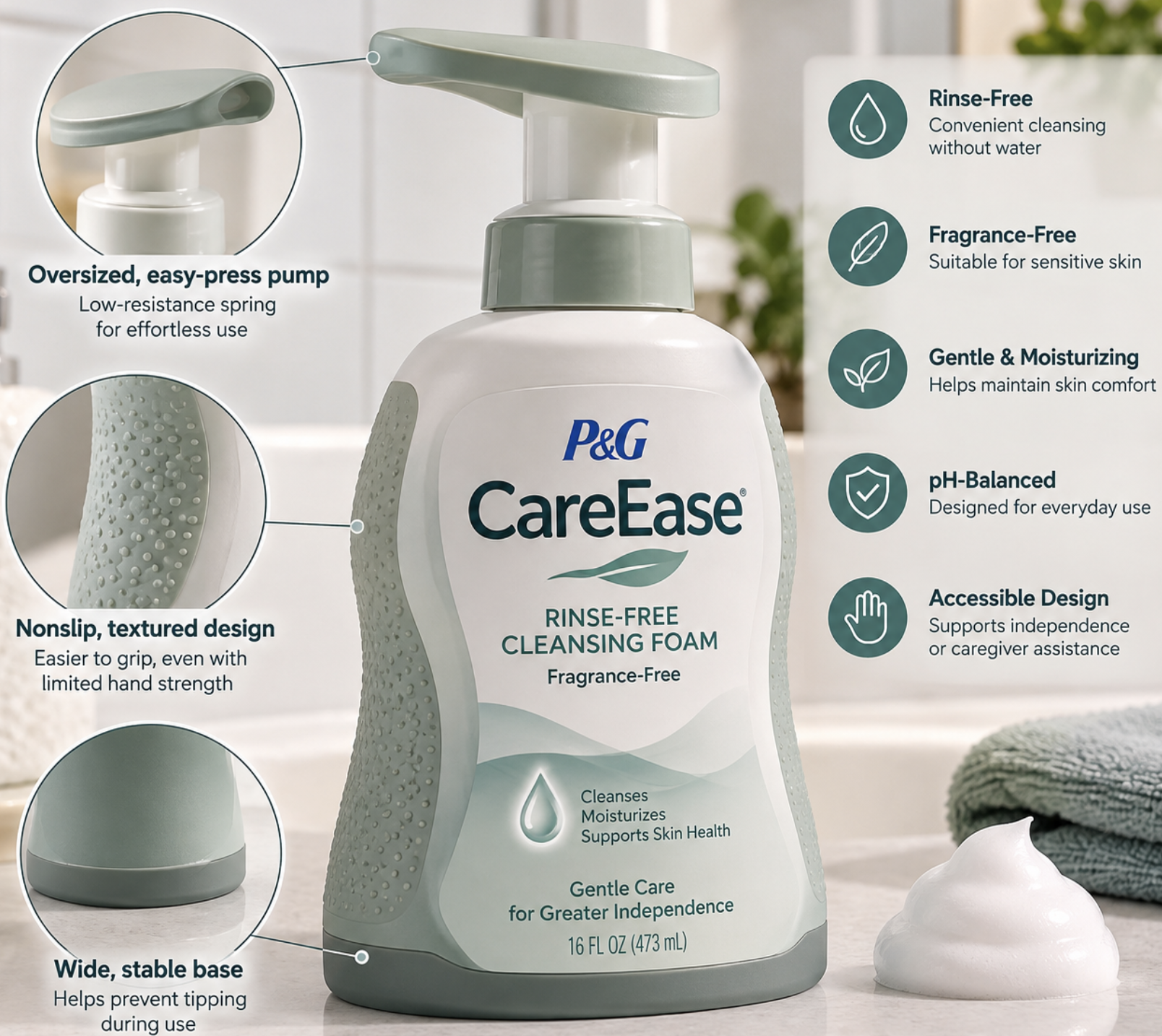
Note. AI-generated conceptual product mockup created using OpenAI’s ChatGPT (2026) for educational purposes. The product is hypothetical and is not affiliated with or endorsed by Procter & Gamble.
Why Procter & Gamble?
I selected Procter & Gamble (P&G) because of its established presence in personal care and household products. The company is known for brands such as Olay, Ivory, Always, and Safeguard. These products have helped establish P&G’s reputation for offering practical solutions to everyday consumer needs (Procter & Gamble, n.d.).
Consumers familiar with P&G would likely expect a new personal hygiene product to be effective, affordable, convenient, and gentle on the skin. CareEase would build on those expectations while addressing accessibility challenges that traditional personal care products may overlook.
Introducing P&G CareEase
CareEase would be a fragrance-free, moisturizing, rinse-free cleansing foam developed for adults experiencing temporary or permanent physical limitations.
Although the cleansing formula is important, the packaging would be the product’s defining feature.
CareEase would feature a wide, nonslip bottle with a stable base and an oversized hand pump. The pump would use a low-resistance spring mechanism, requiring minimal pressure to dispense the foam while maintaining enough tension to return to its original position.
This design would accommodate individuals with reduced grip strength, arthritis, or limited hand mobility. It would also make dispensing easier for caregivers when assistance is necessary.
The goal is not to eliminate the need for caregivers but to give individuals more opportunities to participate in their personal hygiene routines.
Understanding the Target Audience
CareEase would primarily target adults ages 18 and older experiencing mobility challenges, including older adults, individuals with disabilities, and people recovering from surgery or injury.
According to the U.S. Census Bureau (2026), approximately 64.6 million Americans were age 65 or older in 2025. Additionally, the Centers for Disease Control and Prevention (2026) reports that 18.9% of American adults experience some difficulty walking or climbing stairs.
Although these statistics do not directly measure difficulty using hygiene products, they demonstrate why accessibility deserves attention in consumer product development.
Family caregivers would represent a secondary audience because they often assist with purchasing personal care products.
Research Objectives and Design
Before determining whether CareEase should launch nationally, I would establish four research objectives:
- Identify the difficulties consumers experience when using traditional personal hygiene products.
- Determine whether accessible packaging influences consumer preferences and purchasing decisions.
- Evaluate consumer expectations regarding cleansing effectiveness, fragrance, moisturizing properties, and affordability.
- Measure purchase intentions, acceptable pricing, and preferred purchasing locations.
I would use a mixed-methods research design incorporating primary and secondary research.
Qualitative research would include interviews with rehabilitation patients, individuals with disabilities, and caregivers. These conversations would help identify frustrations and desired product improvements.
Quantitative research would involve consumer surveys measuring product preferences, purchasing behaviors, and willingness to pay. Product usability testing would also compare traditional pump dispensers with the proposed CareEase design.
Secondary research would examine population trends, competitors, and market conditions.
Competition and External Market Factors
CareEase would compete with existing rinse-free hygiene products, including Medline’s Remedy Essentials No-Rinse Foam Cleanser. Medline offers a fragrance-free cleansing foam that can be removed with a washcloth and is marketed for everyday personal hygiene (Medline, n.d.).
While Medline has an established product in this category, CareEase would seek differentiation through its accessibility-focused packaging.
Competitive research would evaluate pricing, product features, customer reviews, distribution, promotional strategies, and available sales information.
External factors would also influence the product’s potential success. Inflation could affect consumers’ willingness to pay, while technological improvements in packaging could create opportunities for more accessible designs. Product safety regulations and consumer expectations regarding ingredients would also require consideration.
Conclusion
CareEase was inspired by something I see regularly in rehabilitation: independence matters, even when it involves something as simple as dispensing soap.
I believe consumer products should be designed with different physical abilities in mind rather than expecting everyone to adapt to traditional packaging.
Through marketing research, I hope to determine whether CareEase could address an underserved consumer need while offering P&G an opportunity to expand its personal care portfolio.
Ultimately, the purpose of this research is to understand whether a product designed around accessibility, comfort, and independence could make everyday personal hygiene easier for the people who need it most.
References
Centers for Disease Control and Prevention. (2026). Disability and functioning. National Center for Health Statistics. https://www.cdc.gov/nchs/fastats/disability.htm
Medline. (n.d.). Medline Remedy Essentials no-rinse foam cleanser. https://www.medline.com/product/Medline-Remedy-Essentials-No-Rinse-Foam-Cleanser/Z05-PF178599
OpenAI. (2026). ChatGPT [Generative AI model]. https://chatgpt.com/
Procter & Gamble. (n.d.). Our brands. https://us.pg.com/brands/
U.S. Census Bureau. (2026, June 25). Populations in all age groups growing in the South, driven by outlying counties in metro areas. https://www.census.gov/newsroom/press-releases/2026/vintage-2025-pop-estimates.html


Leave a Reply